
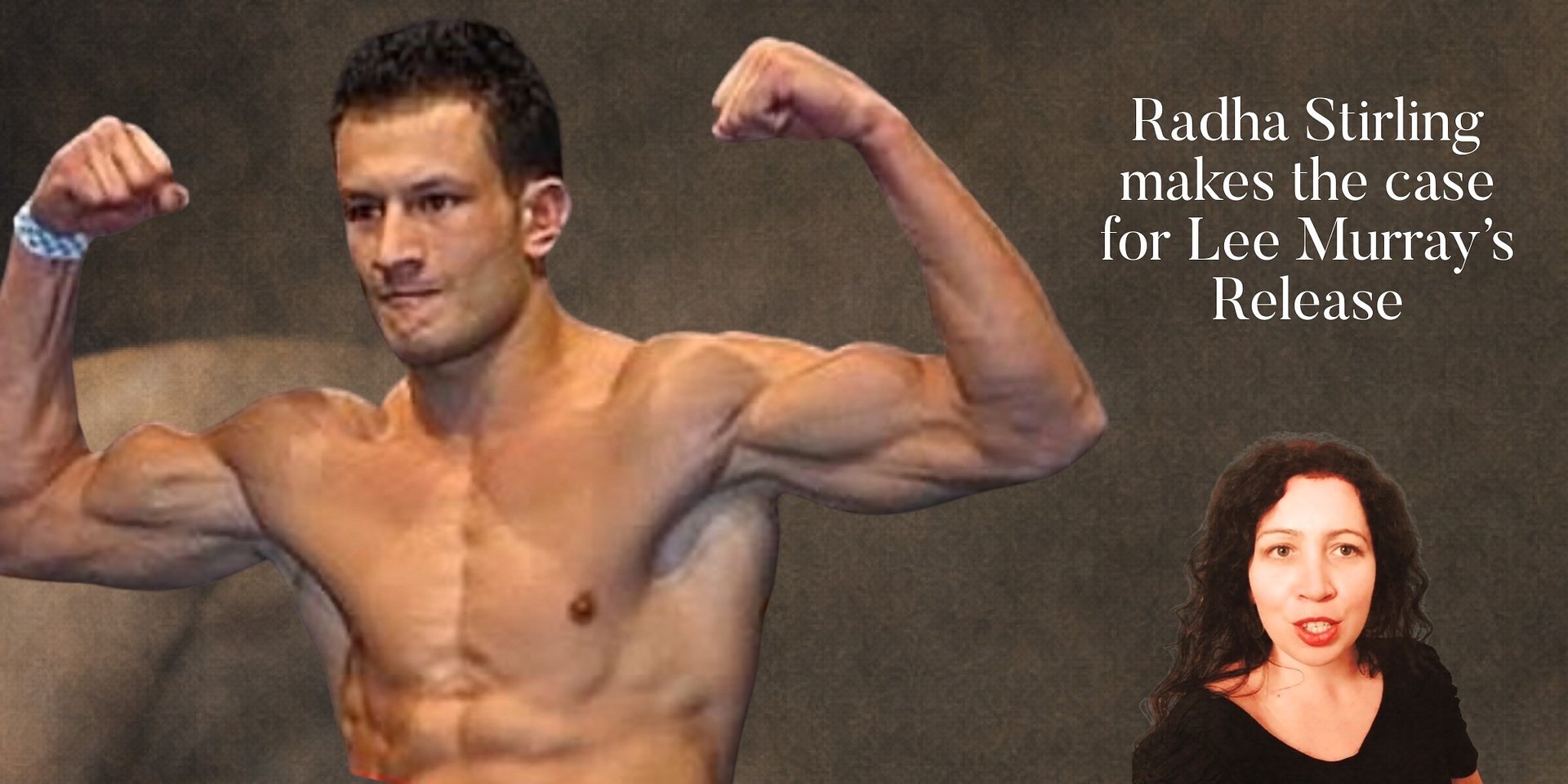
by Radha Stirling, Interpol and Extradition Expert and CEO of Due Process International and Detained in Dubai
This week marks the 20th anniversary of the incident that changed Lee Murray’s life forever. It also marks nearly two decades since he has been sitting in a Moroccan prison cell, much of that time in solitary confinement, thousands of miles from his children, his family and his home.
Whatever people think of the crime itself, there is a basic question that must now be asked: how much punishment is enough?
In 2006, a high profile robbery took place in the United Kingdom. It was a serious offence, yes. But it is equally important to remember that no one was killed. No one was physically injured in the course of the incident. This was not a terrorism attack. It was not a murder. It was not a sexual offence. Yet Lee Murray has now served a sentence that exceeds what many murderers, rapists and convicted terrorists in the UK have actually served in custody.
Twenty years in Moroccan prison. Limited access to family. Deteriorating health that now requires proper medical assessment and care. For any human being, that is an extraordinary price.
Lee was not extradited through normal legal channels. The standard, recognised and transparent mechanism would have been an extradition request from the UK to Morocco, with judicial oversight and due process safeguards. Instead, the UK applied significant diplomatic pressure on Morocco to prosecute him there for a crime committed on British soil. That approach was unprecedented and deeply troubling.
We would rightly criticise countries such as Saudi Arabia or others if they sought to export their justice system abroad through political pressure rather than established legal process. Yet in Lee’s case, that is effectively what occurred. Because the case was high profile and politically sensitive, the UK pursued a route that prioritised optics over principle.
That sets a dangerous precedent.
If governments can use diplomatic leverage to secure prosecutions overseas for domestic crimes, outside of normal extradition frameworks, then the boundaries of jurisdiction and due process become blurred. Justice must not be shaped by headlines or political embarrassment. It must be consistent and fair.
Lee Murray has now served more than many individuals convicted of far graver offences. In the UK, life sentences often result in significantly shorter actual custodial terms than the time he has already endured. Terrorism offences have seen offenders released after serving far less. The comparison is stark.
At some point, punishment ceases to be about accountability and becomes something else entirely.
Lee’s health has declined over the years. Long term confinement has well documented psychological consequences. International human rights bodies have repeatedly warned that prolonged imprisonment can amount to inhuman or degrading treatment. His family speak of a man who has aged beyond his years. His children have grown up without their father. They are now adults who still long for the most ordinary of things: to sit at a table with him, to see him outside a prison visiting room, to live as a family again.
Lee does not present a continuing threat to society. He has spoken of his desire, upon release, to rebuild his life quietly. To work in the fitness industry. To focus on health, discipline and positive contribution. To be a father. To be present.
There is nothing radical in saying that a person who has served twenty years for a non fatal robbery deserves a second chance.
If the UK was able to exert diplomatic pressure on Morocco to prosecute Lee Murray, it can now use that same diplomatic influence to advocate for clemency, compassionate release or repatriation. Political will should not operate in only one direction.
Justice is not about vengeance. It is about proportionality, fairness and humanity. Even those who have committed serious crimes retain their human rights. A democratic society demonstrates its strength not by how harshly it punishes, but by how fairly it does so.
I do not believe that most reasonable people, when presented with the full picture, would say that twenty five years in prison for this offence is fair. Nor would they say that declining health in prolonged confinement is an acceptable endpoint.
Anniversaries are moments of reflection. This one should prompt both the British and Moroccan authorities to ask whether continuing to hold Lee Murray in these conditions serves any meaningful purpose.
Twenty years is enough.
It is time to bring him home.
