
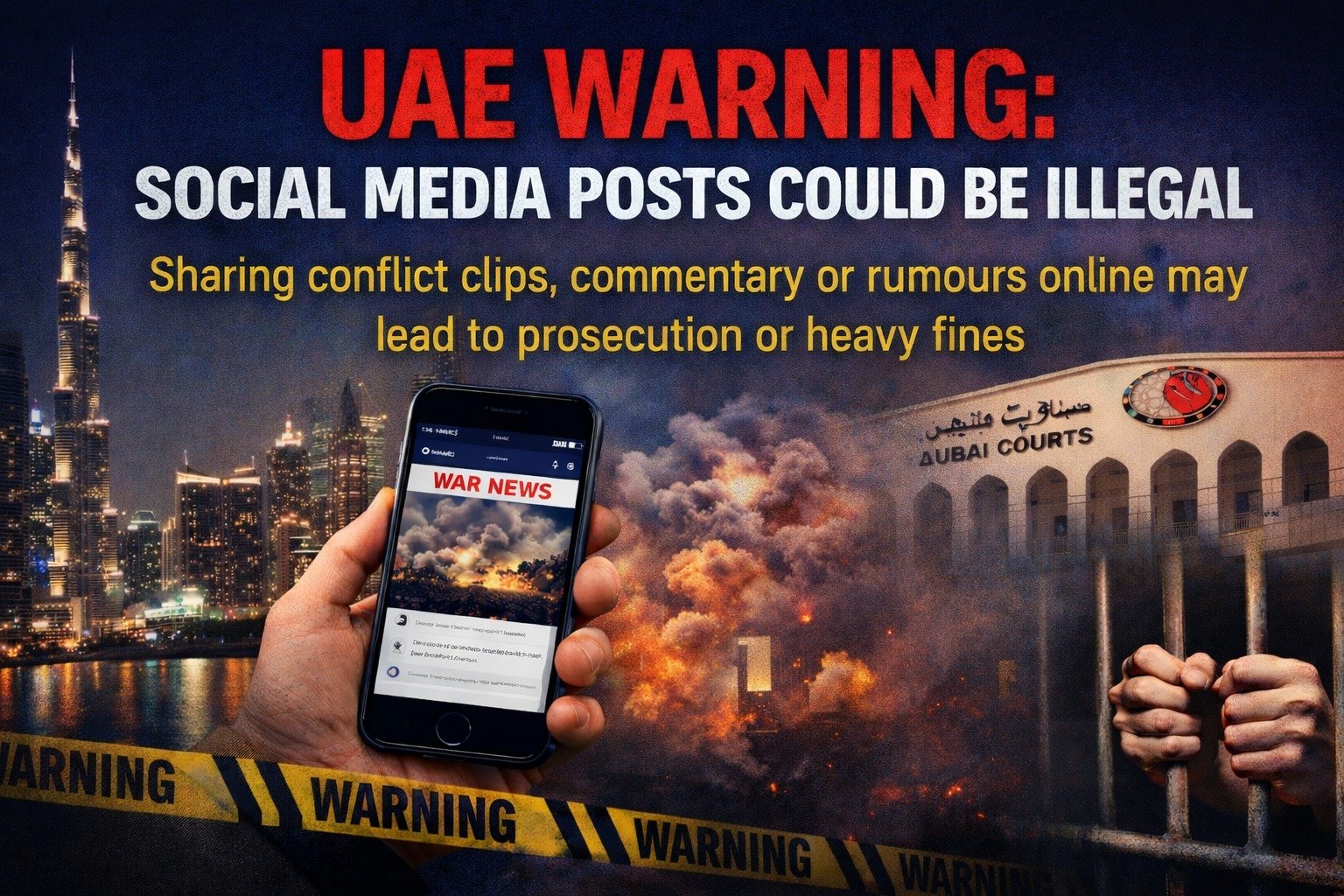
Dubai/London: Cybercrime Laws: Detained in Dubai is issuing an urgent warning to residents, tourists and business travellers currently in the United Arab Emirates.
The UAE has warned that their strict federal social media laws could render Dubai residents and visitors in violation of strict laws that could see them locked up over a post, even if it was just a reshare.
The UAE’s cybercrime laws are among the strictest in the world. Individuals can face fines of up to USD 77,000, lengthy detention, and travel bans for social media posts that authorities consider harmful to “public order”, “national unity” or the reputation of the state.
The legislation is deliberately broad. In practice, commentary about regional conflict, government policy or security matters can be interpreted as a criminal offence.
Do not assume your home country’s free speech protections apply in the UAE. They do not.
Do not assume that sharing international news coverage is safe. It may not be.
Do not assume that deleting a post removes liability. It often does not.
We have assisted numerous foreign nationals who were detained or fined over tweets, Facebook posts, Instagram stories and even WhatsApp messages. Many were unaware they had crossed a legal line.
It is illegal to photograph certain government buildings, military sites and sensitive infrastructure. Individuals have been charged simply for posing in front of restricted locations.
In the current climate, filming missile interceptions, air defence activity or security deployments and posting that content online could expose you to serious legal consequences.
People have previously been at risk for posting negative content about “weather” and a strike from Iran is clearly more sensitive.
During periods of regional conflict, enforcement of cybercrime provisions can intensify. Authorities are particularly sensitive to content deemed to spread “false information”, damage diplomatic relations or undermine national security.
Visitors stranded in the UAE due to airspace disruptions face an additional risk. Well meaning posts expressing fear, frustration or political opinion may inadvertently breach the law.
It has previously been forbidden to publicly comment on controversies involving members of the ruling family, including Princess Latifa and Princess Haya. This illustrates how strictly speech is controlled when issues are deemed politically sensitive.
If you are currently in the UAE:
• Avoid posting commentary about the conflict or regional politics
• Do not share unverified footage or security related images
• Refrain from filming government or military locations
• Exercise extreme caution in private messaging apps
• Do not share unverified footage or security related images
• Refrain from filming government or military locations
• Exercise extreme caution in private messaging apps
The financial penalties are severe. The risk of detention is real. A single post can result in a travel ban preventing you from leaving the country.
Silence in this environment is often self protection.
CEO, Radha Stirling said in a statement:
“The UAE’s cybercrime laws are some of the harshest in the world when it comes to social media. People can face fines of up to USD 77,000 simply for posting commentary that authorities say harms ‘public order’ or ‘national unity’. The wording of the law is deliberately broad, which means almost anything critical of government policy or regional conflict can be interpreted as a crime. It was likewise forbidden to comment publicly about the controversies surrounding Princess Latifa and Princess Haya.
“In times of war, these laws become even more dangerous. Residents are effectively being warned to stay silent online. Visitors are particularly vulnerable because they often assume they are protected by their home country’s standards of free speech. They are not.
“We have dealt with numerous cases where foreign nationals faced detention, travel bans or crippling fines over tweets, Facebook posts or WhatsApp messages.. The risk is very real, and many people are now too frightened to speak publicly, even if they disagree with what is happening. It is illegal to take photos of government buildings and people have been charged for posing in front of forbidden sites. There is a real risk that well meaning visitors stranded in the UAE will be inadvertently breaking the law.”
