
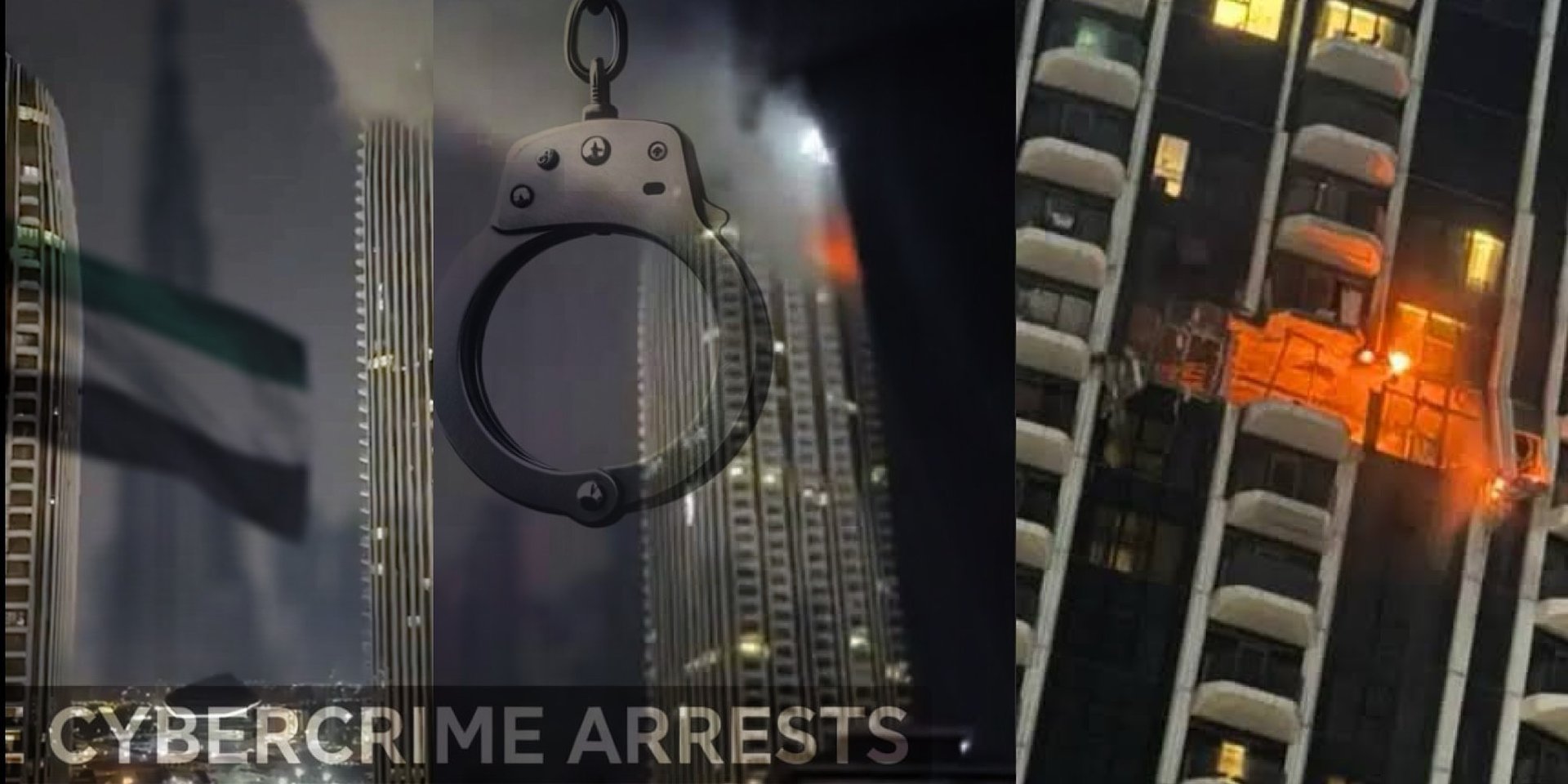
Three residents who survived a drone strike on their apartment building in Dubai were arrested after privately sharing a photograph with loved ones confirming they were alive following the explosion.
The individuals were inside their Creek Harbour homes when a drone struck their residential building, causing an explosion. In the immediate aftermath of the blast, they photographed the damage and sent the image privately to family members to reassure them that they had survived.
Instead of receiving support as victims of the incident, the residents were detained by Dubai police after authorities requested to see their phones.
The arrests come amid a wider crackdown in the United Arab Emirates on the sharing of images or videos related to the recent drone and missile attacks targeting the country. The crackdown can be confusing for residents who can already see photos and videos of the attacks widely published across mainstream and social media. Authorities have warned that circulating such content could lead to prosecution under the country’s cybercrime laws.
Radha Stirling, an Expert Witness, Crisis Manager and CEO of Detained in Dubai, said the case highlights the risks foreign residents face when reacting normally to traumatic events.
“When people experience something as shocking as a drone strike hitting their building, their first instinct is to contact their families and let them know they are safe,” Stirling said.
“Criminalising that human response risks punishing victims rather than protecting them.”
The individuals had not publicly posted the photograph online and were simply communicating privately with loved ones during a moment of fear and uncertainty. They were shaken and disturbed after repeatedly being told how safe the country was by local influencers.
Stirling warned that many expatriates may not realise how broadly the UAE’s cybercrime laws can be applied.
“Foreign residents often assume that sending a photo privately to family members is harmless. In the UAE, even a personal unshared photograph related to sensitive events can trigger a criminal investigation.”
Detained in Dubai is urging foreign governments to raise concerns with UAE authorities and ensure that citizens caught up in the incidents are treated as victims rather than suspects.
“People who have just experienced an explosion in their own home should not be facing detention simply for telling their families they survived,” Stirling said.
“We have contacted the foreign ministers of the individuals’ respective countries to request urgent support and to urge the UAE to apply common sense when enforcing its laws in situations involving traumatised victims.”
